The Icon
The Toyota 70-Series
Over four decades of continuous production. Sold in more than 40 countries. Never officially available in North America — until now.
The Toyota 70-Series Land Cruiser was introduced in 1984 as the successor to the legendary 40-Series. While the Land Cruiser line evolved toward luxury with the 80, 100, and 200 series, Toyota kept the 70-Series in production as the purpose-built workhorse — the vehicle you'd choose when failure isn't an option.
It's the vehicle of choice for the United Nations, the Australian Outback, African aid organizations, Middle Eastern oil fields, and militaries around the world. Its combination of a body-on-frame chassis, solid front and rear axles, mechanical simplicity, and Toyota's legendary reliability make it virtually indestructible.
| Production | 1984 – Present |
| Assembly | Japan (Yoshiwara Plant) |
| Platform | Body-on-Frame |
| Axles | Solid Front & Rear |
| Classic Engines | 1HZ · 1HD-T · 1HD-FTE Inline-6 Diesel |
| Power Range | 129 hp (1HZ) – 201 hp (1HD-FTE) |
| Transfer Case | Part-Time 4WD, 2-Speed |
| Locking Diffs | Rear Standard, Front Optional |
| GVM | Up to 3,300 kg (7,275 lbs) |
| Markets | Australia, Japan, Middle East, Africa, South America |
The 70-Series comes in several body styles, each with a distinct character and purpose. Here's how to tell them apart.
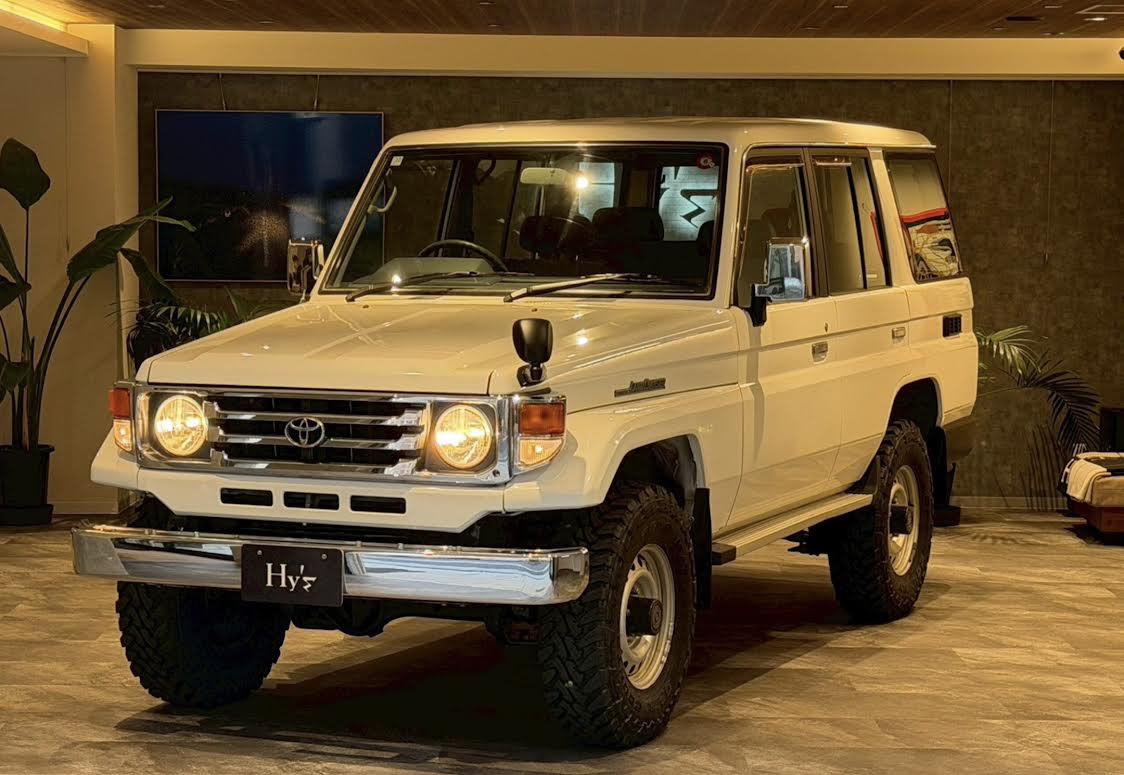
The five-door wagon is the most versatile model in the lineup. Seats five with a large rear cargo area, it works equally well as a daily driver, road-trip vehicle, or expedition platform. This is the model most comparable to a modern SUV — but far more capable off-road and mechanically simpler. Think of it as a civilized version of the 40-Series.
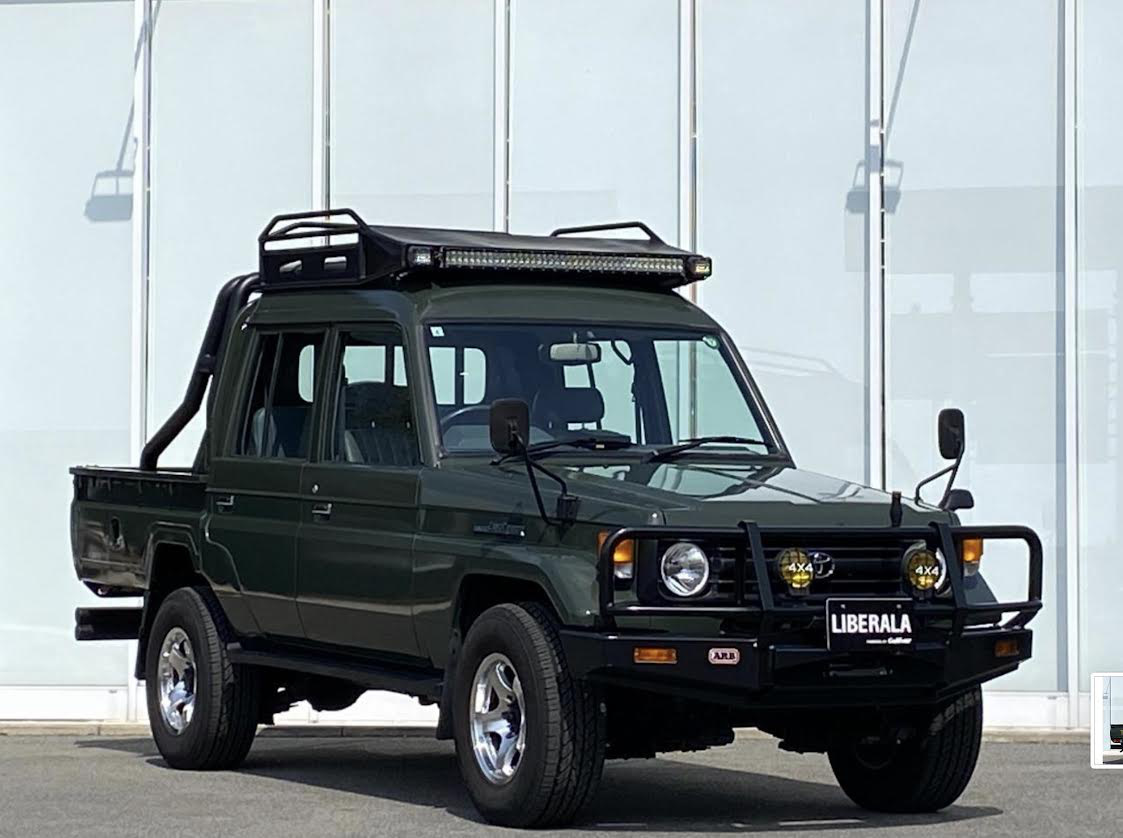
Available as a single cab or double (dual) cab, the 79 is the utility workhorse. The single cab has a long tray ideal for trade work or expedition builds, while the double cab adds rear seating without sacrificing too much bed length. Enormously popular in Australia and the Gulf states, it's the truck that refuses to die.
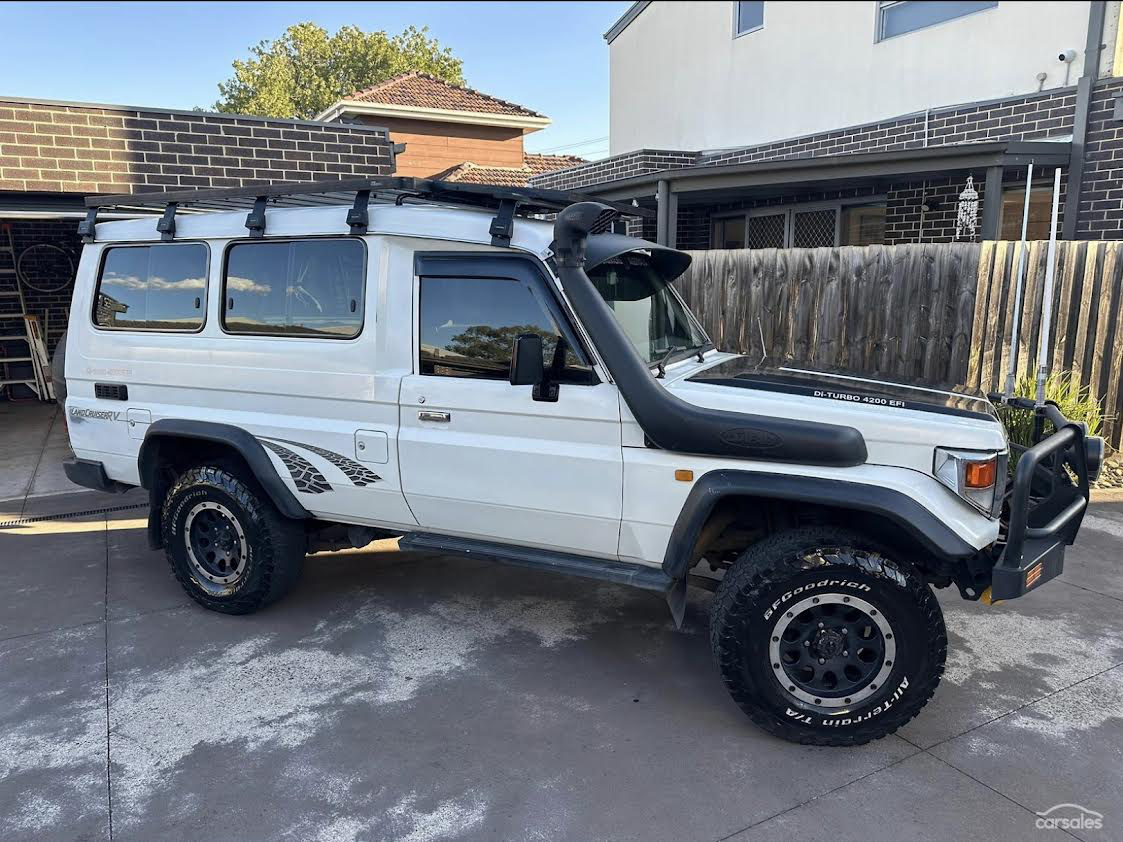
The "Troop Carrier" is a two-door wagon with an extended roof and massive interior volume. Originally designed to transport personnel, it has become the platform of choice for overland camper conversions. The tall roof, flat floor, and barn-door rear make it an ideal blank canvas. It's the cult favorite — and the hardest to find.
The short-wheelbase model carries the most direct DNA from the original FJ40. Compact, maneuverable, and incredibly capable in tight terrain. Less commonly imported due to limited availability, but prized by collectors and enthusiasts who want the closest thing to a modern-day FJ40.
Unlike virtually every modern SUV and truck (which use independent front suspension), the 70-Series retains solid axles at both ends. This means superior articulation, easier maintenance, and near-indestructible suspension geometry on rough terrain.
No drive-by-wire throttle, no air suspension, no complex multi-link geometry. The 70-Series is designed to be understood and repaired anywhere in the world with basic tools. This is a feature, not a compromise.
The pre-2002 70-Series came powered by some of the most respected diesel engines ever built — the naturally aspirated 1HZ, the turbocharged 1HD-T, and the intercooled 1HD-FTE. Simple, unstoppable, and built to run for hundreds of thousands of kilometres. These are the engines that earned the Land Cruiser its reputation.
A proper ladder frame chassis means the body and frame are separate components. This makes the vehicle more resistant to twisting forces off-road, easier to repair after body damage, and ideal for custom builds and modifications.
Four decades of incremental refinement without the compromises of a ground-up redesign. Toyota has simply kept making it better while keeping everything that works. The 2024 model shares far more with the 1984 original than any other vehicle in production today.
The heart of every import-eligible 70-Series is a Toyota inline-six diesel — engines revered worldwide for running hundreds of thousands of kilometres without breaking a sweat.
4.2L Inline-6 · Naturally Aspirated
| Power | 129 hp / 206 lb-ft |
| Aspiration | Naturally Aspirated |
| Fuel System | Indirect Injection |
| Reputation | Bulletproof reliability |
The most common engine in the 70-Series. Not fast, but nearly indestructible. Favored by aid organizations and militaries for its ability to run on poor-quality fuel in extreme conditions. If you want a motor that will outlast the chassis, this is it.
4.2L Inline-6 · Turbocharged
| Power | 160 hp / 268 lb-ft |
| Aspiration | Turbocharged |
| Fuel System | Indirect Injection |
| Reputation | Strong and proven |
The turbocharged evolution of the 1HD. Substantially more torque for towing and highway cruising while retaining the same legendary bottom end. Found in the 80-Series and some 70-Series models. A great balance of power and simplicity.
4.2L Inline-6 · Turbo · Direct Injection
| Power | 201 hp / 317 lb-ft |
| Aspiration | Turbo + Intercooler |
| Fuel System | Direct Injection + ECU |
| Reputation | The ultimate LC diesel |
The crown jewel. Toyota's most advanced iteration of the 4.2L inline-six: direct injection, electronic fuel management, intercooled turbocharger, and 201 horsepower. Found in late-model 100-Series and select 70-Series builds — it delivers modern diesel performance with old-school Toyota reliability. Extremely rare in import-eligible trucks. If you find one, don't hesitate.
Browse our current inventory or tell us exactly what you're looking for and we'll source it.